Matemáticas
Matemáticas de Singapur
A child should not merely finish a page of sums. They should understand why the method works, and be able to show it.
01 — The Approach
Why we teach mathematics this way
Singapore Math is built on a simple conviction: a child who has understood an idea can explain it, and a child who has only memorized a procedure cannot. It moves deliberately slowly through fewer topics, and does not leave one until it is genuinely secure.
We chose it over programs that spiral quickly through many topics each year, revisiting each one briefly. Spiralling lets a shaky understanding survive to the next grade. Mastery does not: the class does not move on until the class can do it.
02 — How It Is Taught
Concrete, pictorial, abstract
-
Concrete
A child meets a new idea with objects in their hands — counters, blocks, bundles of ten. Before any symbol appears, the mathematics is something they have physically done.
-
Pictorial
The objects become a drawing. The bar model is the workhorse here: a problem in words becomes a picture of the relationship, which is what makes word problems solvable rather than mysterious.
-
Abstract
Only now do the numerals and signs arrive, and they mean something, because the child has already seen the idea twice. The symbol is a shorthand for something understood, not a rule to be obeyed.
03 — By the End
What a child can do
By the end of each stage, in plain terms.
| Stage | What a student can do |
|---|---|
| Kindergarten – Grade 2 | Number bonds to twenty, place value, addition and subtraction with regrouping, and the beginnings of the bar model. |
| Grades 3 – 5 | Multiplication and division fluency, fractions as quantities rather than shapes, decimals, area and perimeter, and multi-step word problems drawn as bar models. |
| Grades 6 – 7 | Ratio and proportion, percentages, negative numbers, algebraic thinking, and geometry — with the reasoning written out, not just the answer. |
04 — A Worked Example
One problem, the Singapore way
A ribbon is 80 cm long. It is cut into two pieces, and one piece is three times as long as the other. How long is the shorter piece?
Draw four equal bars. One bar is the short piece; three bars are the long piece.
The picture does the work the words were hiding.
Four bars make 80 cm, so one bar is 20 cm. The shorter piece is 20 cm.
No formula was needed, and the child can explain every step.
05 — What We Use
What we use
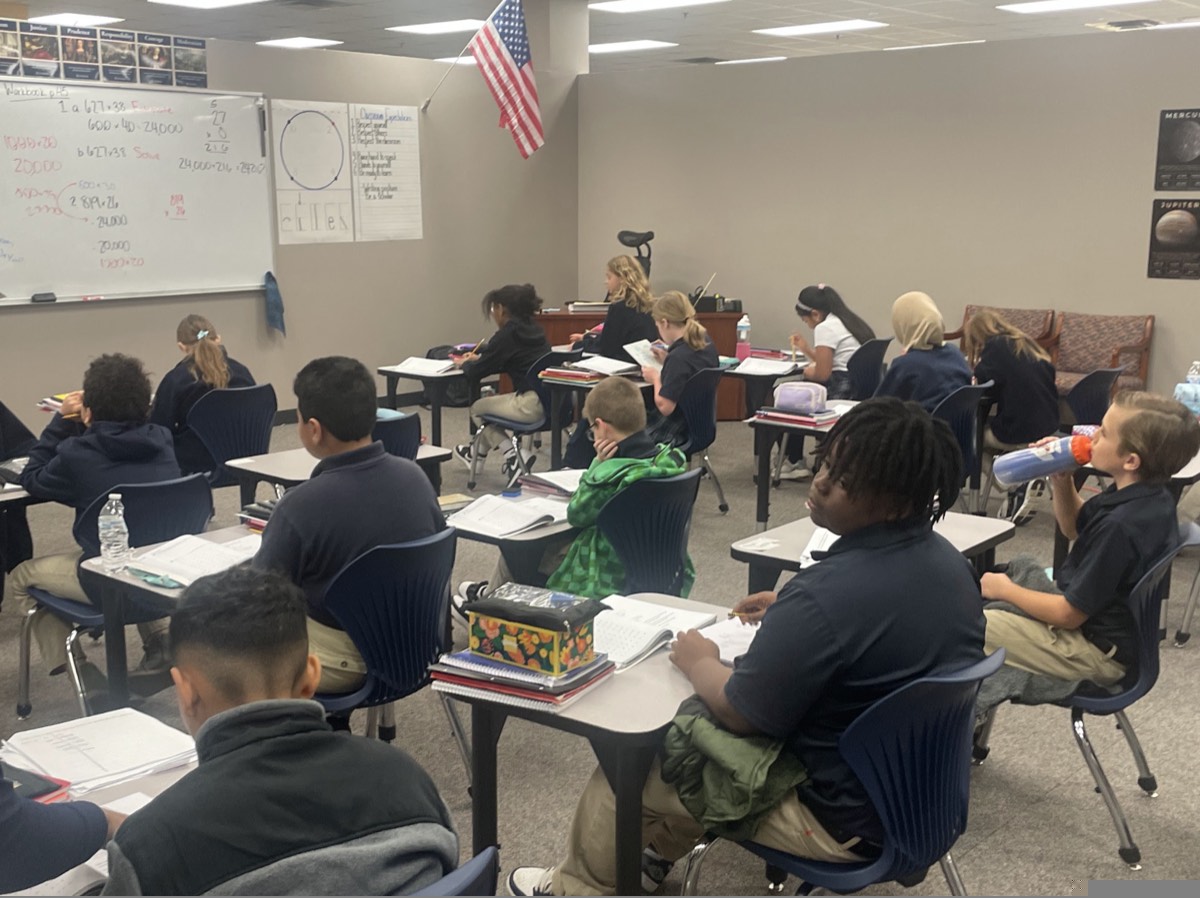
- Textbook and workbook Each child works from a textbook for the lesson and a workbook for independent practice.
- Manipulatives Counters, base-ten blocks and fraction pieces, used in class rather than kept for display.
- Mental math practice Short, daily, and cumulative, so fluency is maintained rather than revised for.
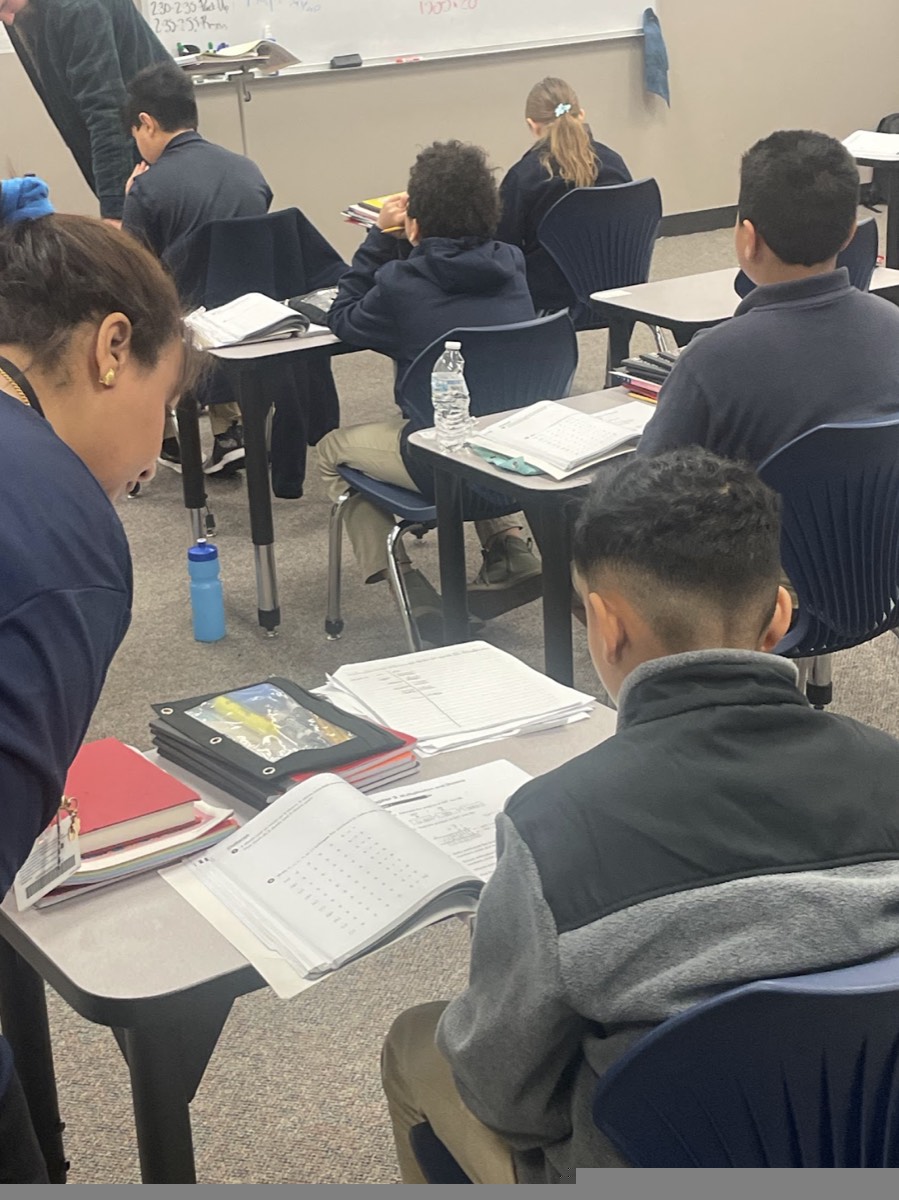
When a child can draw the problem, the problem stops being frightening.
ACAR Teacher
06 — Progress
How we know it is working
Teachers check understanding continuously in class — a child explaining a method is the real assessment — alongside unit tests at the end of each topic. Report cards describe what a child can do, not only a score, and a teacher will always talk you through it.
07 — At Home
How to help at home
-
Ask them to explain it to you
Ask how they know, not whether they got it right. A child who can teach you the method has understood it.
-
Let them draw the problem
If a word problem stalls, ask them to draw the bars. That is the tool, and it works at the kitchen table.
-
Practice facts little and often
Five minutes of times tables most days beats an hour at the weekend.
08 — Common Questions
What families ask
My child is already ahead. Will they be bored?
No. Mastery teaching goes deeper rather than faster: a child who is secure moves on to richer problems on the same idea, which is harder and more interesting than new procedures.
My child finds maths hard. Will they keep up?
Because the class does not move on until an idea is secure, a struggling child gets the time they need rather than falling further behind each term. Teachers reteach in small groups as a matter of course.
Why so few topics a year?
Because understanding takes time and cannot be hurried. Fewer topics, properly learned, produce a child who can reason — which is what the later grades depend on.
Enroll Today
Give your child a classical education
Tuition-free, K–7, in Rutherford County. No cost and no entrance exam.