Reading and Language Arts
Fonética explícita
Every child is taught to read by sounding words out — not by guessing from the picture, the shape of the word, or the rest of the sentence.
01 — The Approach
Why we teach reading this way
Explicit, systematic phonics means every sound the English writing system uses is taught directly, in a deliberate order, until a child can decode a word they have never seen before. Nothing is left to be picked up along the way.
We chose it over balanced literacy, where children are encouraged to guess at a word from context or from the first letter. Guessing works on simple books and fails on hard ones, and it fails last for the children who can least afford it.
02 — How It Is Taught
From sounds to sentences
-
Letter sounds
A child learns the sounds letters make, one at a time and in a planned order, including the sounds made by letter pairs.
-
Blending
Sounds are pushed together into words out loud. This is the hinge of the whole thing: a child who can blend can read a new word.
-
Decodable text
They read books written using only the sounds they have been taught, so reading is always something they can actually do rather than something they must guess at.
-
Fluency
With decoding secure, reading becomes smooth and quick enough that attention is free for meaning rather than spent on the words.
-
Comprehension
Now the reading is about what the text says. A child with real knowledge behind them understands far more of it — which is why the rest of the curriculum matters here too.
03 — By the End
What a child can read
By the end of each stage, in plain terms.
| Stage | What a student can do |
|---|---|
| Kindergarten – Grade 2 | All single letter sounds and common letter pairs; blending and decoding unfamiliar words; reading simple books independently and writing in cursive. |
| Grades 3 – 5 | Multi-syllable words, prefixes, suffixes and common spelling patterns; reading full chapter books and older texts with growing fluency. |
| Grades 6 – 7 | Reading demanding literature and historical sources closely, using Latin roots to work out unfamiliar vocabulary, and writing about what they have read. |
04 — A Worked Example
One word, sounded out
The word is splash.
s · p · l · a · sh
Five sounds, not six letters. The child has been taught that “sh” is one sound.
Blend them: spl–a–sh. Splash.
Nothing was guessed, and the same method will open the next new word.
05 — What We Use
What we use
- A structured phonics program Taught in sequence, daily, from kindergarten — not as an intervention for children who are behind.
- Decodable readers Books matched to the sounds taught so far, so a child is never asked to guess.
- Cursive handwriting Taught from the start. Forming letters by hand supports reading them, and the charts stay on the wall where children can see them.
A child who can sound out a word they have never seen is free. They no longer need us to read.
ACAR Teacher
06 — Progress
How we know it is working
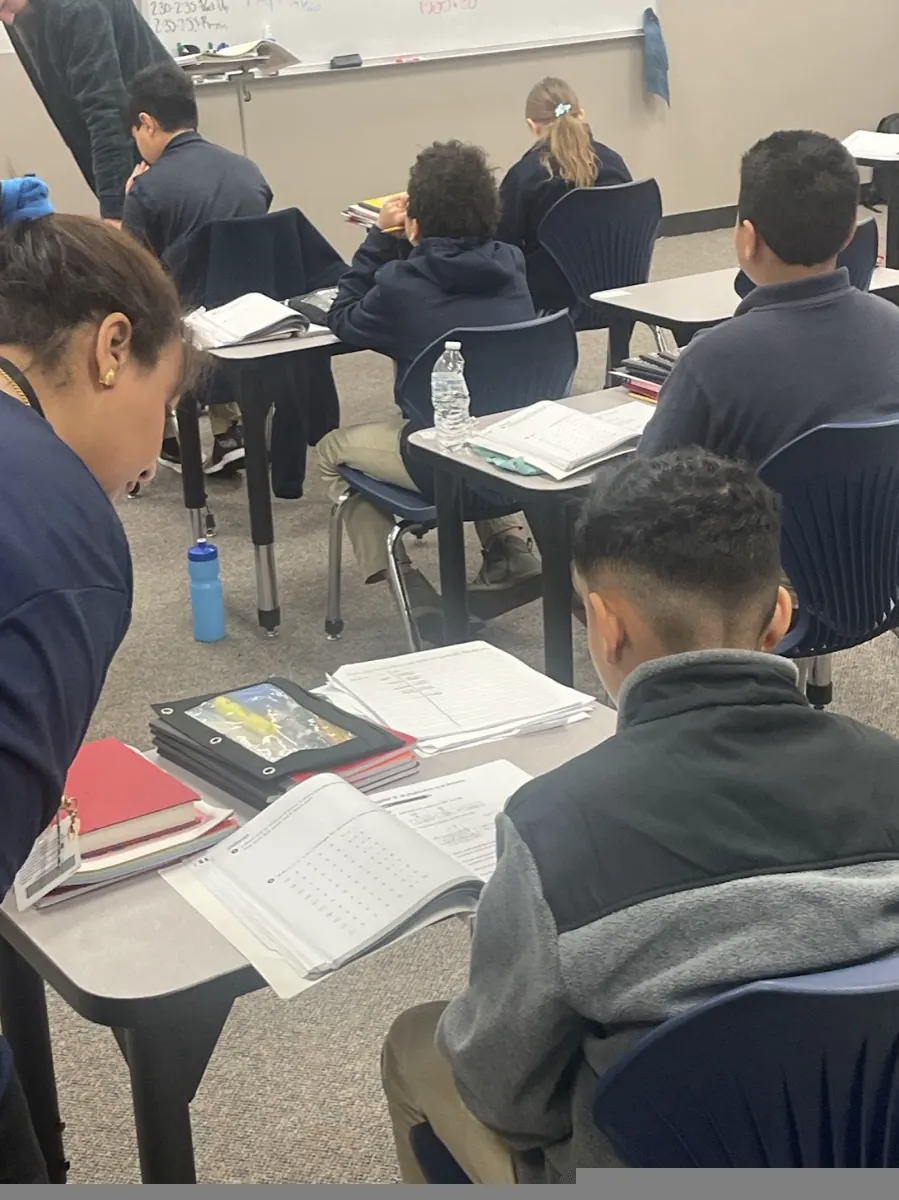
Teachers listen to children read individually and regularly — which is the only real way to hear whether a child is decoding or guessing — alongside checks at the end of each unit. Report cards describe what a child can decode and how fluently they read, and a teacher will always talk you through it.
07 — At Home
How to help at home
-
Read aloud to them every night
Well above the level they can read themselves. It builds vocabulary and the appetite that makes the work worth doing.
-
Practice sounds, not whole-word flashcards
Ask what sound a letter makes rather than drilling words by sight. Sight-word memorizing is the habit phonics is meant to replace.
-
When they get stuck, do not supply the word
Ask them to sound it out. The pause is where the learning happens.
08 — Common Questions
What families ask
My child is already reading. Will this hold them back?
No. A child who already reads still gains from knowing the code explicitly — it shows up in their spelling and in how they handle unfamiliar words. They read more demanding books alongside it.
My child is behind. Will they catch up?
Explicit phonics is exactly what helps most here, because nothing is assumed. Teachers reteach sounds in small groups, and a child can be caught up without being singled out.
What about a child with dyslexia?
Structured, explicit phonics is the approach most consistent with what is known about teaching dyslexic children to read. As a public school we also provide the supports required under an IEP or 504 plan, and our team will work with you.
Enroll Today
Give your child a classical education
Tuition-free, K–7, in Rutherford County. No cost and no entrance exam.