What Is Classical Education
The Oldest Way to Learn
Classical education is a time-tested approach that fills a child with real knowledge, trains the mind to reason clearly, and forms character toward the good, the true, and the beautiful.
01 — The Idea
Education as it was meant to be
Classical education is not new and not experimental. It is the pattern that formed the thinkers, writers and citizens of the Western tradition for centuries, and it begins from a question most schooling has stopped asking: what does a child actually need in order to live well?
The answer is a full course of study — history, literature, mathematics, science, Latin, art and music — taught in a deliberate order, by a teacher who knows the subject and knows the child.
02 — The Trivium
Grammar, logic, rhetoric — in plain words
The trivium is simply the three stages a child moves through as they grow. It sounds technical; it is not. It means teaching each skill when a child is most ready to learn it.
-
Grammar — the years for learning things by heart
In the youngest grades, children have remarkable memories and love to recite. So this is when they gather facts: the multiplication tables, the poems, the names of rivers and states, the sounds letters make, the stories that everything else is built on.
-
Logic — the years for asking why
As children grow, they begin to argue — naturally, insistently. Rather than fight it, classical education channels it. Students learn how a sound argument is built, how to spot one that is not, and how to reason from what they already know.
-
Rhetoric — the years for saying it well
Finally, students learn to express what they know clearly, gracefully and persuasively — in writing and in speech. A child who has stored knowledge and learned to reason with it now has something worth saying, and the means to say it.
03 — Content-Rich
Real books, real knowledge
You cannot think about nothing. A child taught only “skills” and “strategies,” with no content to apply them to, is left thin. Classical education is deliberately full: it gives a child something to think about.
Across our Grammar School and Upper School, a child might read Aesop and the tales of ancient heroes, learn the roots of English through Latin, work through mathematics until it is genuinely understood rather than merely finished, and come to know the history of their own country.
04 — Character
The good, the true, and the beautiful
A school forms character whether it means to or not. We choose to do it deliberately. Alongside knowledge, our students practice the virtues — courage, honesty, perseverance, moderation, friendship, prudence — in the ordinary business of a school day.
We hold up what is good, teach what is true, and surround children with what is beautiful, trusting that young people who see the best will come to love it.
05 — The Teacher
A teacher at the front, on purpose
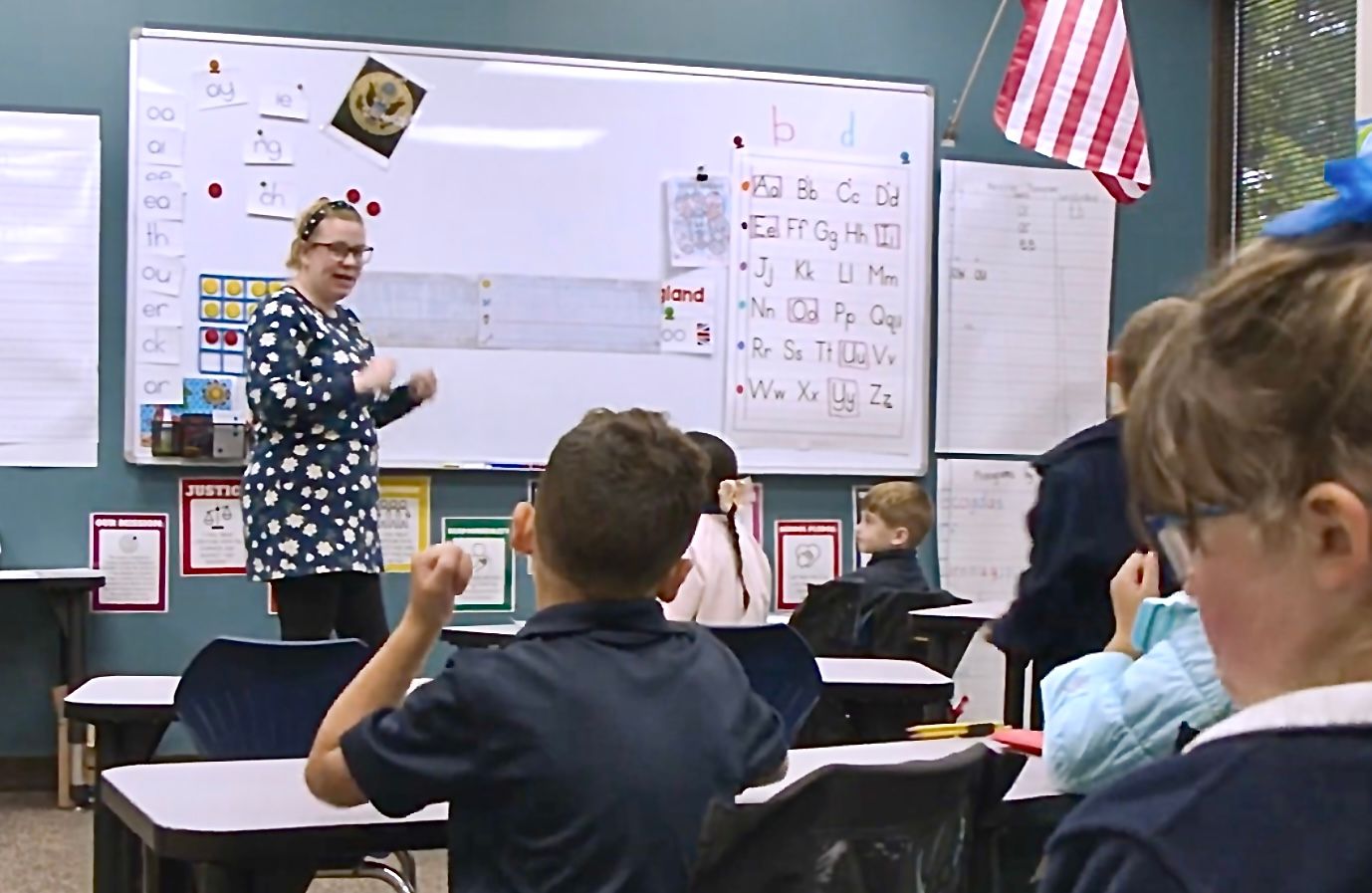
In our classrooms a knowledgeable adult leads the learning — not a screen, not self-paced software, not a child left to discover it all alone. This is a choice, and we make it because teaching is a human act.
The room is calm and ordered so that real attention is possible. Children rise to what is expected of them, and much is expected here.
06 — Socratic Dialogue
Learning by conversation
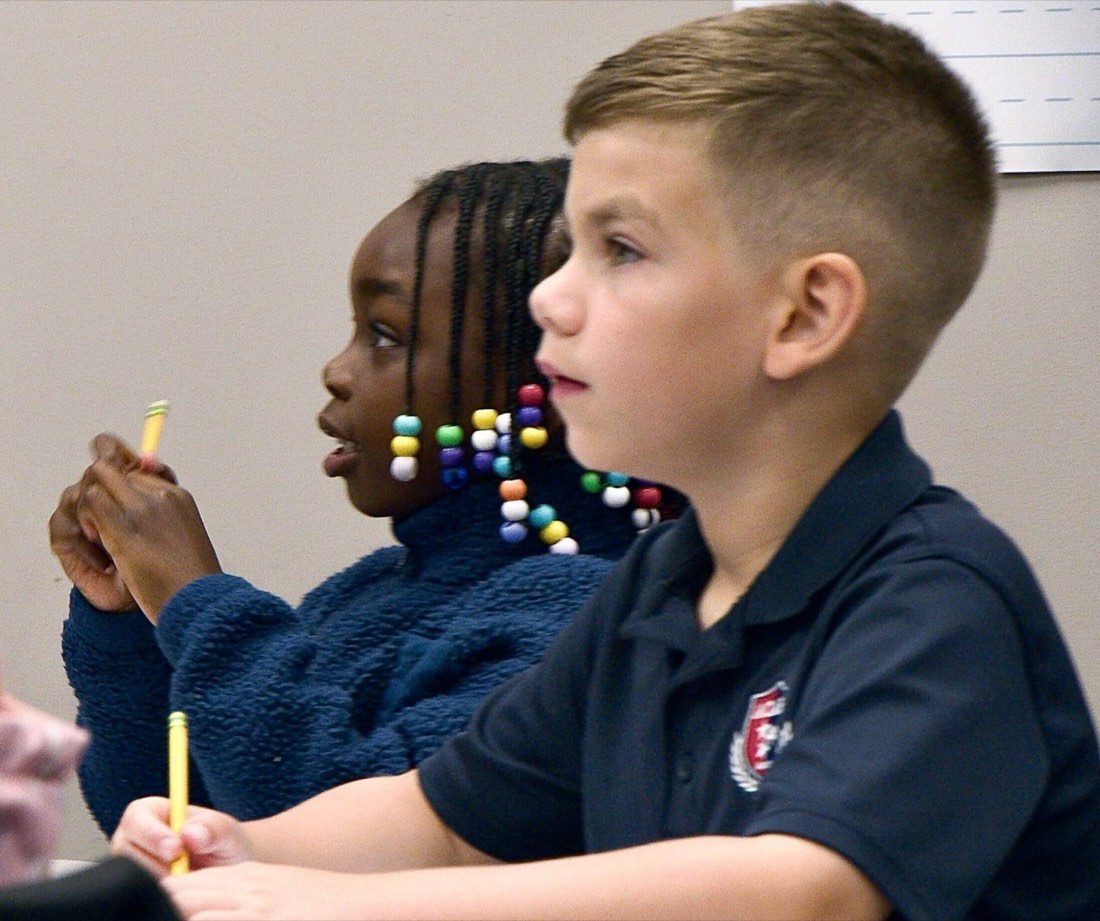
Much of the day is a guided conversation. A teacher asks a genuine question, listens to a real answer, and asks again — drawing understanding out of students rather than reading it at them.
TeacherThe story says the hero was brave. What did he actually do that made you call him brave?
StudentHe went into the cave even though he was afraid.
TeacherSo can a person be brave and afraid at the same time?
StudentYes — if he wasn’t afraid, going in wouldn’t take any courage at all.
TeacherThen what is courage, really?
The student did not memorize a definition. He built one — and he will remember it, because it is his.
The task of the modern educator is not to cut down jungles, but to irrigate deserts.
C. S. Lewis, The Abolition of Man
07 — Honest Questions
The questions parents actually ask
Is this a religious school?
No. American Classical Academy Rutherford is a tuition-free public charter school, open to every family in Rutherford County. We teach the moral and civic virtues that a free society depends on — honesty, courage, self-government, respect for others — as a matter of character, not of creed.
Is it rigid or old-fashioned?
It is orderly, and it is demanding — but a classroom where children can concentrate is a gift, not a cage. High expectations paired with a warm, attentive teacher are what allow a child to do work they are proud of.
Is it right for every child?
Classical education is not for a certain type of student — it is for every student. There is no entrance exam and no cost. Children of every background and every starting point are taught the same rich content, with the support they need to reach it.
08 — The Partnership
In partnership with Hillsdale College
We do not build a classical education from scratch. Through Hillsdale College’s K–12 initiative, our teachers work from a proven curriculum refined over years, and are trained and supported in teaching it.
- A complete, sequenced K–12 course of study grounded in the liberal arts
- Rooted in human nature and directed toward moral and intellectual formation
- Ongoing teacher training and support from Hillsdale College
Enroll Today
Give your child a classical education
Tuition-free, K–7, in Rutherford County. No cost and no entrance exam — enrollment is by application.